
Consulting: A selection of projects from 2025
Germany


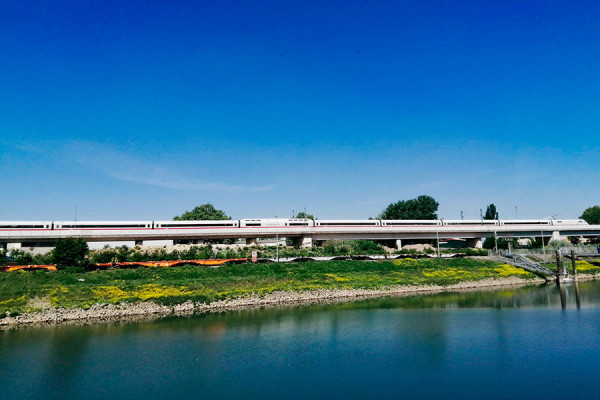
The Deutschlandtakt is the federal government’s overarching strategy for an efficient, reliable and attractive rail network of the future in Germany. SMA is supporting the work on the Deutschlandtakt at various levels. A key focus of our work in 2025 was the completion of the expert report on the Strategic Implementation Plan for the Deutschlandtakt (phasing). This implementation plan comprises se...
Continue reading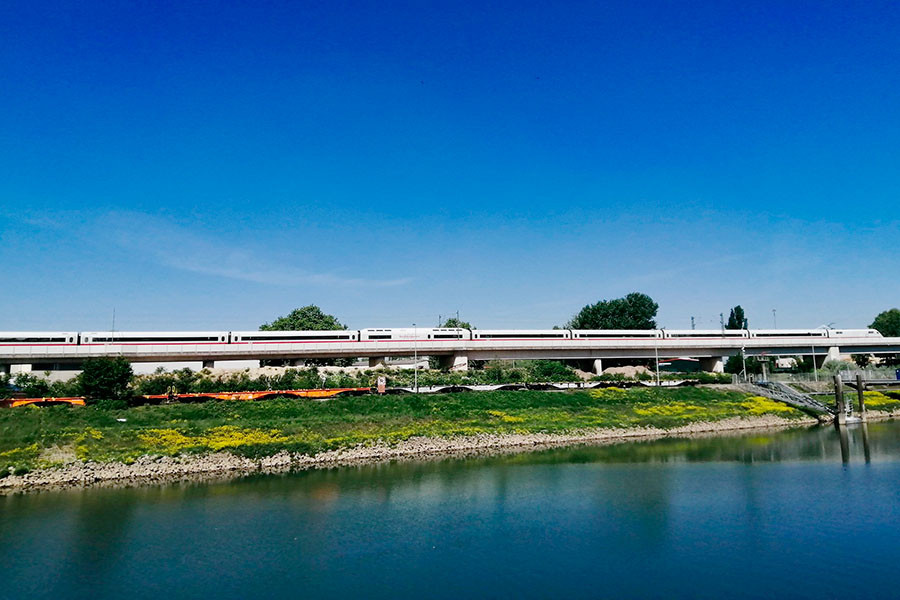
Germany


Federal Ministry of Transport: Strategic Implementation Plan for the Deutschlandtakt (Phasing)
The Deutschlandtakt is the federal government’s overarching strategy for an efficient, reliable and attractive rail network of the future in Germany. SMA is supporting the work on the Deutschlandtakt at various levels. A key focus of our work in 2025 was the completion of the expert report on the Strategic Implementation Plan for the Deutschlandtakt (phasing). This implementation plan comprises service concepts for the medium and long term, including the corresponding prioritised infrastructure packages, as well as a standard process for the coordination of all implementation elements of federal rail transport infrastructure planning relating to the Deutschlandtakt target timetable. The work also included the development of (transport-related) criteria for prioritising expansion and new construction projects.
This report examined which implementation phases on the path towards the Deutschlandtakt would deliver the greatest possible transport benefits for passengers and freight customers. This provides the long-term vision of the Deutschlandtakt with medium-term interim targets. The phasing does not replace the long-term target timetable, but rather breaks it down, from an infrastructure perspective, into stages, each with its own service concept. It fills a gap in the federal government’s strategic infrastructure planning by placing the projects of the current Deutschlandtakt target timetable and the Rail Requirements Plan into an implementation sequence and thus prioritising them.
The 2035 phase has been planned in terms of timetables as the basis for the 2035 target network currently under development, which is intended to en-compass not only the prioritised expansion and new construction projects but also the existing network. The planned expert proposal for the 2035 phase consists of a service concept and a derived infrastructure package. It was developed with the involvement of stakeholders and – like the subsequent phases – provides technical input for the current work on the 2035 Target Network. The results will thus be incorporated into the subsequent processes.
In 2025, SMA continued to support the NVBW and the Baden-Württemberg Ministry of Transport on various issues relating to the Baden-Württemberg Integrated Transport System (ITF), particulary the Stuttgart 21 hub. In addition to addressing numerous minor issues, an in-depth analysis of various subject areas was also carried out. An intensive study was carried out on the closure of the tunnel between...
Continue reading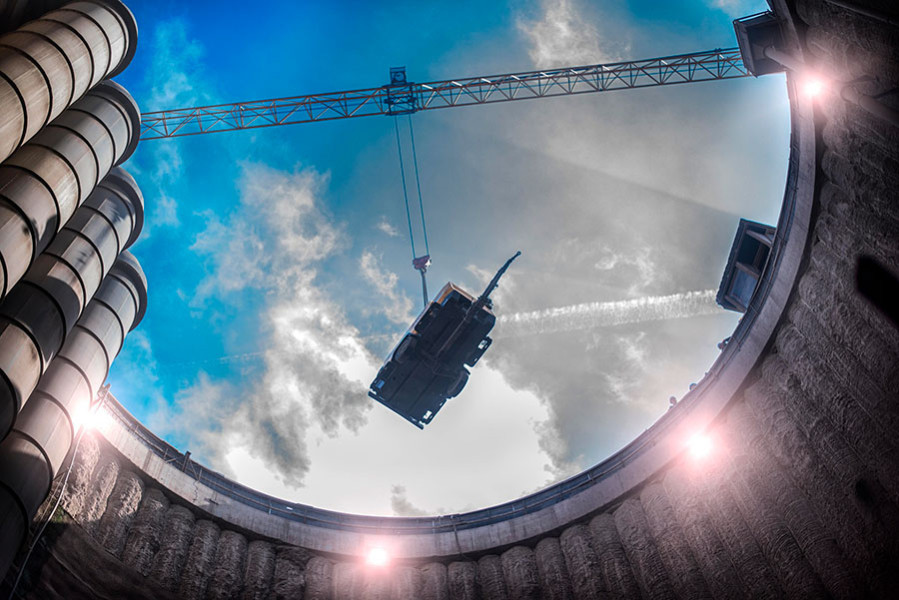
Germany
Nahverkehrsgesellschaft Baden-Württemberg (NVBW): Framework agreement on the further development of the ITF BW
In 2025, SMA continued to support the NVBW and the Baden-Württemberg Ministry of Transport on various issues relating to the Baden-Württemberg Integrated Transport System (ITF), particulary the Stuttgart 21 hub. In addition to addressing numerous minor issues, an in-depth analysis of various subject areas was also carried out.
An intensive study was carried out on the closure of the tunnel between Bad Cannstatt and Stuttgart main station within the Stuttgart 21 hub. This involved an analysis across different time horizons and infrastructure states, as well as a options for single-track closure or a complete closure. Service concepts were developed for the various scenarios, and requirements for additional infrastructure, altered routes and through services were derived.
With the commissioning of Stuttgart 21, the Untertürkheim depot will replace the Rosenstein depot. A detailed analysis was carried out using a 24-hour timetable, focusing in particular on the connection between the Untertürkheim depot and Stuttgart-Bad Cannstatt via line 4711. This involved determining when the greatest congestion occurs across all route elements and for all modes of transport throughout the day.

SMA has developed service concepts for the Neustadt (Dosse) – Güstrow and Parchim – Waren (Müritz) routes on behalf of the states of Brandenburg and Mecklenburg-Western Pomerania. In an iterative process carried out in collaboration with partners, the expected demand was determined alongside the development of the service concepts, the required infrastructure was planned, and a cost calculation wa...
Continue reading
Germany
VBB Verkehrsverbund Berlin-Brandenburg GmbH, VMV Verkehrsgesellschaft Mecklenburg-Vorpommern mbH: Feasibility study on a sustainable transport and infrastructure concept for southern Mecklenburg and the Prignitz region
SMA has developed service concepts for the Neustadt (Dosse) – Güstrow and Parchim – Waren (Müritz) routes on behalf of the states of Brandenburg and Mecklenburg-Western Pomerania. In an iterative process carried out in collaboration with partners, the expected demand was determined alongside the development of the service concepts, the required infrastructure was planned, and a cost calculation was carried out. This process made it possible to eliminate uneconomical options during the concept phase and to focus on the most economically viable options. A cost-benefit analysis (standardised assessment) was carried out for the developed options in a separate project.
During the course of the project, two options emerged for further consideration. The “160 km/h” option is based on a continuous EMU-operated regional express (RE) line from Berlin to Rostock via Neustadt (Dosse) and Karow (Mecklenburg). At Pritzwalk and Karow (Mecklenburg) stations, this option allows for the establishment of level crossings with the lines operating on the east-west axes. In contrast, the “80 km/h” variant focuses on providing attractive local access to the areas around Malchow and Plau am See, which are popular with tourists. This variant envisages new regional (RB) lines operated by BEMUs, which run exclusively within the study area and have good connections to the longer-distance (RE) lines at the edge of the study area. In the subsequent cost-benefit analysis, a benefit-cost ratio (BCR) of over 1.0 was demonstrated for both variants, with the 80 km/h option being rated significantly more cost-effective than the 160 km/h option, with a BCR of 1.46 compared to 1.15 respectively. The two states have announced that they will examine the next steps towards implementing the ‘80 km/h’ option.
In 2025, SMA continued to support the KC ITF NRW and the three regional public transport authorities in North Rhine-Westphalia (go.Rheinland, VRR and NWL) in the further development of the state’s integrated regular-interval timetable. SMA formed a working group with Quattron GmbH from Aachen to support the KC ITF NRW. In 2025, the KC ITF NRW’s priorities included the development of measures to im...
Continue reading
Germany
KC ITF NRW and local authorities in North Rhine-Westphalia: Work in 2025
In 2025, SMA continued to support the KC ITF NRW and the three regional public transport authorities in North Rhine-Westphalia (go.Rheinland, VRR and NWL) in the further development of the state’s integrated regular-interval timetable. SMA formed a working group with Quattron GmbH from Aachen to support the KC ITF NRW.
In 2025, the KC ITF NRW’s priorities included the development of measures to improve the operational quality of regional rail services in North Rhine-Westphalia. This involved analysing delay data and comparing punctuality trends with existing time reserves in the timetable and critical points along the route. Subsequently, measures to ease timetable constraints were developed in collaboration with the regional rail authorities. Some of these measures have already been implemented with the timetable change at the end of 2025.
To ensure long-term improvements in operational quality in target network planning, SMA supported the timetable robustness assessment for the NRW 2040 target network, which is being carried out by DB InfraGO AG.
SMA has also addressed various issues relating to the further development of the ITF on behalf of the transport authorities in NRW. For example, vehicle rostering was carried out for various tender networks.
Within the VRR area, new through services in the Ruhr region were investigated to optimise the service concept and assessed in terms of vehicle deployment, improved travel links and the impact on operational quality. In addition, SMA carried out standardised assessments for several newly planned regional rail stations to demonstrate their economic viability.
The results of the work in North Rhine-Westphalia have been presented and discussed in working groups and committees. The work was supplemented by the annual monitoring of service volumes and the updating of the current timetable in the form of netgraph.
The work will continue in the current year.


The Hanau–Aschaffenburg line, which is currently double-tracked, has already reached its capacity limit due to the combination of heavy passenger traffic on the Frankfurt–Würzburg route and heavy freight traffic on the Fulda–Darmstadt route. In addition to the high traffic volumes, this is also due to the at-grade junctions of the freight lines in Großkrotzenburg and Mainaschaff which limit capaci...
Continue reading
Germany


DB InfraGO AG, Central Region: Development of the operational specifications for the four-track expansion of the Hanau–Aschaffenburg line
The Hanau–Aschaffenburg line, which is currently double-tracked, has already reached its capacity limit due to the combination of heavy passenger traffic on the Frankfurt–Würzburg route and heavy freight traffic on the Fulda–Darmstadt route. In addition to the high traffic volumes, this is also due to the at-grade junctions of the freight lines in Großkrotzenburg and Mainaschaff which limit capacity. The planned increases in traffic volumes under the Deutschlandtakt initiative require the line to be upgraded to four tracks. The traffic requirements for this upgrade are defined in a traffic specification (VAst). In addition to the four-track expansion of the Großkrotzenburg–Mainaschaff section, the objective is to provide grade-separated connections for the branching freight lines and to equip the line with ETCS Level 2. This requires defining the operational and infrastructural requirements for the target state within the operational specification (BAst) and assessing the existing state of the infrastructure. Together with DB InfraGO AG, SMA is developing the operational requirements for the target state and taking these into account when devising suitable infrastructure options for the construction of the four-track line. Factors considered here include, for example, the needs of con-necting customers, requirements regarding operational performance, as well as the track superstructure, signalling and safety technology, and environ-mental considerations. The findings are formally documented in the BAst as the work progresses. This forms the basis for the further, detailed design of the infrastructure in subsequent project phases, as well as for communication with the Federal Ministry of Transport.
The railway bridges over Venloer Straße, Vogelsanger Straße, Zülpicher Straße and Luxemburger Straße in Cologne are over 100 years old and need to be replaced. From the third quarter of 2028 until the end of the first quarter of 2030, these four bridges will be completely closed whilst they are being replaced on Cologne’s Westring. During normal operations, the bridges are used not only by the lon...
Continue reading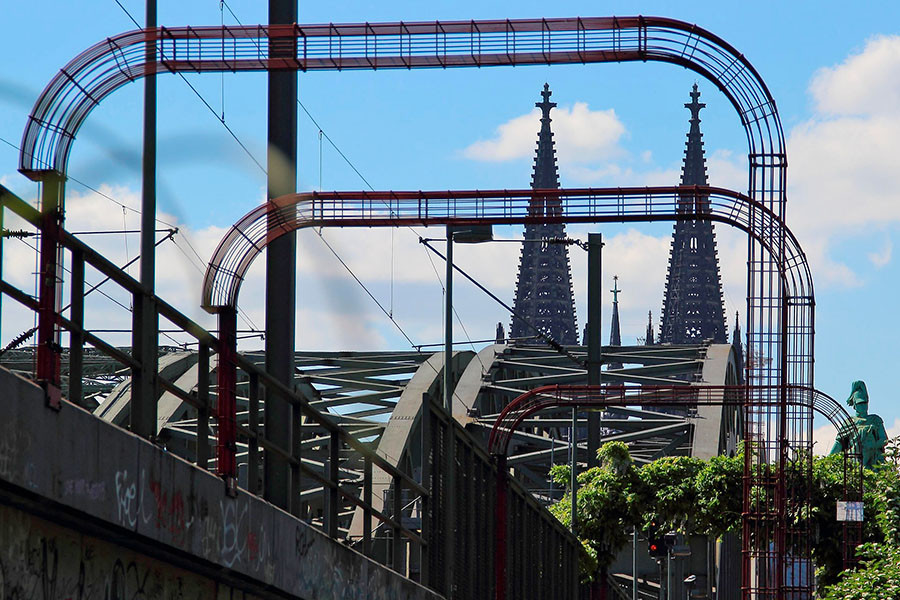
Germany
go.Rheinland GmbH: Worksite concepts for the renovation of Cologne’s bridges
The railway bridges over Venloer Straße, Vogelsanger Straße, Zülpicher Straße and Luxemburger Straße in Cologne are over 100 years old and need to be replaced. From the third quarter of 2028 until the end of the first quarter of 2030, these four bridges will be completely closed whilst they are being replaced on Cologne’s Westring.
During normal operations, the bridges are used not only by the long-distance passenger and freight services but also by six hourly regional rail services. The Cologne South Bridge, which is normally used only by freight, could be used as a possible diversion route. However, diverting all six regional rail services is not possible, partly due to capacity constraints. Consequently, some regional rail services will need to be turned back at temporary stations in the south of Cologne.
SMA has developed timetable concepts to meet the specified constraints. In designing these, particular account had to be taken of the existing transport contracts and the resulting fleet sizes available. A further objective was to ensure that passengers from both the Eifel region and the Left Bank of the Rhine could reach Cologne city centre and the main station as easily as possible, with only minor increases in journey times compared to the current situation. Appropriate interchange facilities were planned at the junction of the two corridors, and minor infrastructure works were identified. In a further step, the results are to be discussed with the railway operators concerned and DB InfraGO AG. Regulatory aspects must also be discussed to ensure that the diversion route is not overloaded and to guarantee stable operations during the construction phase, including the diverted regional rail services.
Austria

In 2024, the Austrian Federal Ministry for Innovation, Mobility and Infrastructure published the 2040 Target Network. This Target Network sets out the federal government’s long-term strategy for expanding the rail network in Austria, serving as a transport policy guideline for achieving mobility and climate policy objectives. To ensure that both the infrastructure and production resources are gea...
Continue reading
Austria
ÖBB-Personenverkehr AG: Development of a rolling stock and production concept for the ‘Zielnetz Österreich 2040’ network
In 2024, the Austrian Federal Ministry for Innovation, Mobility and Infrastructure published the 2040 Target Network. This Target Network sets out the federal government’s long-term strategy for expanding the rail network in Austria, serving as a transport policy guideline for achieving mobility and climate policy objectives.
To ensure that both the infrastructure and production resources are geared towards this target service concept, ÖBB-Personenverkehrs AG, with the support of SMA, has developed a rolling stock and production concept for the 2030, 2035 and 2040 horizons. This outlines the resources required to implement the Target Network service and the steps needed to adapt current vehicles and facilities accordingly.
As part of this study, route-specific timetables were created, which enabled the requirements for the rolling stock and fleet size to be determined. For each line, suitable vehicle concepts were identified and, in line with the requirement for vehicle fleets to be as uniform as possible, fleet requirements were determined across various scenarios. Building on the fleet concept, a production concept was developed that allowed the necessary storage and maintenance capacities to be estimated and compared with the existing and planned capacities. The results serve as the basis for the strategic further development of the ÖBB-Personenverkehrs AG fleet, as well as the infrastructure in coordination with ÖBB-Infrastruktur AG and ÖBB-Technische Services-GmbH for maintenance requirements.

To ensure the necessary resources for ÖBB-Personenverkehr AG’s rail replacement services (SEV), SMA developed a methodology in 2024 to estimate the required number of buses per worksite and calendar day. The key elements are: – Standard timetable for trains – Journey times and distances for replacement bus services – Demand data to determine capacity requirements – Infrastructure closures By proce...
Continue reading
Austria

ÖBB-Personenverkehr AG: Rail replacement services in Austria in 2026 and 2027
To ensure the necessary resources for ÖBB-Personenverkehr AG’s rail replacement services (SEV), SMA developed a methodology in 2024 to estimate the required number of buses per worksite and calendar day.
The key elements are:
– Standard timetable for trains
– Journey times and distances for replacement bus services
– Demand data to determine capacity requirements
– Infrastructure closures
By processing this data for the whole of Austria in the form of templates (pre-defined SEV concepts for specific route sections), it is possible to calculate – by selecting the relevant template based on the work sites – the expected SEV bus requirements over the course of the year for each template. By aggregating these results various key figures can be calculated for each federal state, for each bus route, and for the whole of Austria.
Following a successful pilot application, we were commissioned by ÖBB-Personenverkehr AG to consolidate the method and further develop it based on the experience gained from the pilot. Subsequently, the method was applied to the 2026 and 2027 timetable years, considering the works planned on the rail network for those years. Thanks to this method, an overall picture of the demand for SEV resources was created, enabling ÖBB-Personenverkehr AG to secure the necessary resources (i.e. buses and drivers) well in advance.
Canada

The GO Rail Expansion Project in Toronto is shaping the suburban rail network of the future. The program aims faster and more frequent train service by delivering new transit infrastructure and operational plans that will reduce journey times, add capacity and further improve on-time performance and customer satisfaction. SMA has been supporting Onxpress Operations Inc. since the bidding phase in...
Continue reading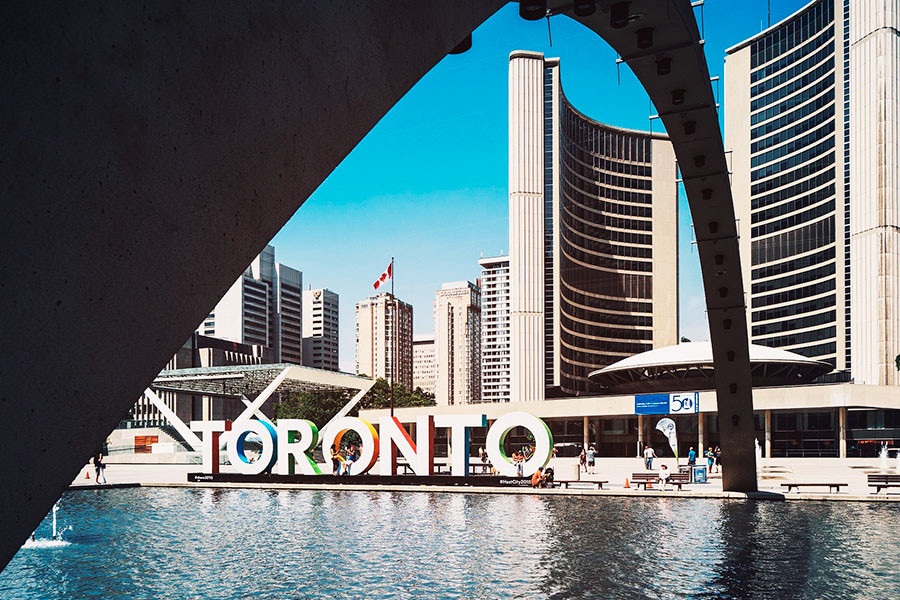
Canada
Metrolinx: Support in strategic planning for the future Toronto rail services
The GO Rail Expansion Project in Toronto is shaping the suburban rail network of the future. The program aims faster and more frequent train service by delivering new transit infrastructure and operational plans that will reduce journey times, add capacity and further improve on-time performance and customer satisfaction.
SMA has been supporting Onxpress Operations Inc. since the bidding phase in 2020. Following the most recent changes in the project environment with Metrolinx taking back responsibility of the project and consolidating its role of planning authority for railway services, SMA has been confirmed as a partner by Metrolinx to support the timetable design, to verify the consistency of foreseen service levels and infrastructure development, and to identify optimization opportunities for medium and long term scenarios.
The core of SMA’s activities, performed by SMA in partnership with Metrolinx’s strategic operations planning team, includes designing systematic and 24 hours timetables for both work days and the weekend, defining and testing operational concepts, developing rolling stock rosters and the interface between the timetable output and the simulation tool.
The activities, which are still ongoing, are carried out for all the relevant intermediate time horizons of the infrastructure upgrades, aligned with a coherent development of service scenarios, to provide a consistent ramp-up of the offer in line with the infrastructure investment steps, and to identify the fleet pool needed to deliver the desired timetable.
The timetable approach is used to support decision making in several challenging domains, including fleet types and their performance, infrastructure layout and operations, stabling locations and workshops.
Switzerland

The arrival of new rolling stock, the modernisation of infrastructure and workshops, and the planned expansion of services require significant investment, leading to higher operating costs. This situation risks resulting in a reduction in the cost recovery ratio. Against this backdrop, the study aimed to propose ways to optimise operations and maintenance and was carried out in collaboration with...
Continue reading
Switzerland
CJ – TransN: Optimisation of the TRV service and rolling stock maintenance
The arrival of new rolling stock, the modernisation of infrastructure and workshops, and the planned expansion of services require significant investment, leading to higher operating costs. This situation risks resulting in a reduction in the cost recovery ratio. Against this backdrop, the study aimed to propose ways to optimise operations and maintenance and was carried out in collaboration with a partner.
SMA developed and compared several scenarios for regular and 24-hour timetables for the La Chaux-de-Fonds – Les Ponts-de-Martel, La Chaux-de-Fonds – Le Noirmont – Glovelier and Le Noirmont – Tavannes lines. The work was carried out in close coordination with the management of both companies and with the regional passenger transport (TRV) authorities.
Three scenarios, differing in terms of service levels, the organisation of rolling stock maintenance and the location of workshops, were then developed and analysed. For each scenario, SMA determined the required rolling stock fleet, compiled usage statistics (train-kilometres, hours in service, number of journeys) and assessed the quality of the service and the response to demand. A comparative analysis of all the variants enabled the respective strengths and weaknesses to be summarised and recommendations to be formulated.
The introduction of the 2025 timetable has radically transformed rail services in the French-speaking region of Switzerland, particularly in the canton of Vaud and along the key Lausanne–Geneva route. Against a backdrop of steadily rising passenger numbers and given that major refurbishments at Geneva and Lausanne stations will not be operational until 2038, the Canton of Vaud anticipates a risk o...
Continue reading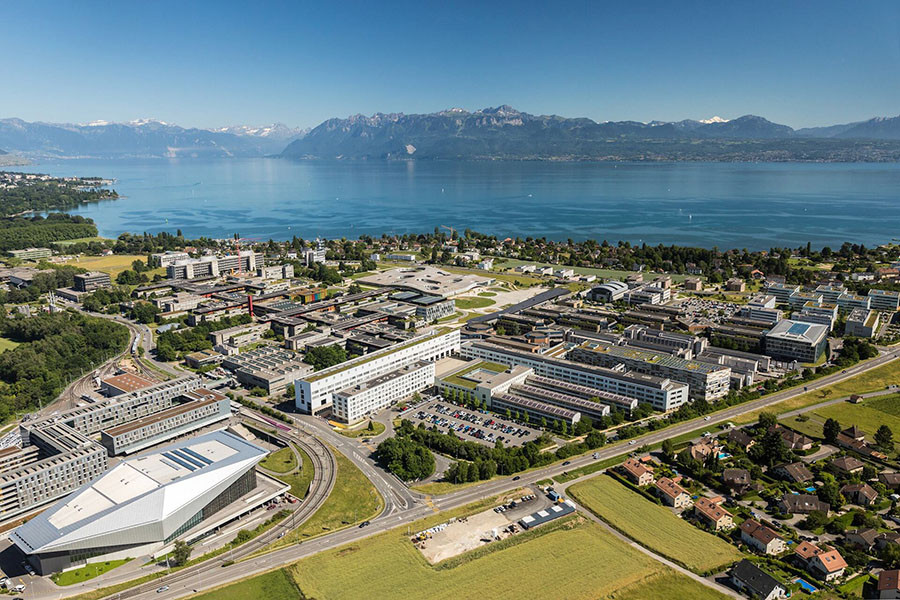
Switzerland
Canton of Vaud: Support for the 2025+ timetable
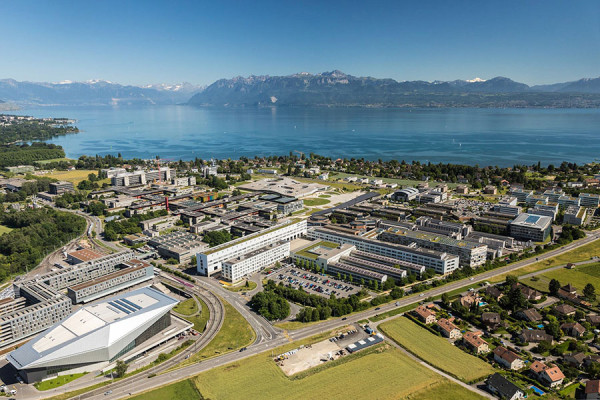
The introduction of the 2025 timetable has radically transformed rail services in the French-speaking region of Switzerland, particularly in the canton of Vaud and along the key Lausanne–Geneva route. Against a backdrop of steadily rising passenger numbers and given that major refurbishments at Geneva and Lausanne stations will not be operational until 2038, the Canton of Vaud anticipates a risk of saturation on the commuter rail network and the Lausanne–Geneva routes. It therefore wishes to proactively plan the intermediate stages of development between 2025 and future medium- and long-term deadlines.
The study’s approach was based on an assessment of the current situation, forecasts of demand trends and the identification of risks of overloading, for both regional and mainline services, in close collaboration with SBB. Several scenarios were developed by adjusting key parameters of the rail system – rolling stock, stopping policy, timetable structure – with infrastructure modifications excluded in the short term. The various measures identified were tested and incorporated into consolidated scenarios, which were assessed using a systems-based approach with Viriato, enabling the operational constraints, rolling stock requirements and timetable feasibility to be objectively evaluated.
As part of the ‘Zukunft Bahnhof Bern’ expansion programme, a new underground station for Regionalverkehr Bern-Solothurn (RBS) trains is currently under construction and is scheduled to go into operation in 2031 according to the latest plans. Compared to the existing station, this new facility will feature significantly larger public areas and an optimised track layout. SMA supported RBS as early a...
Continue reading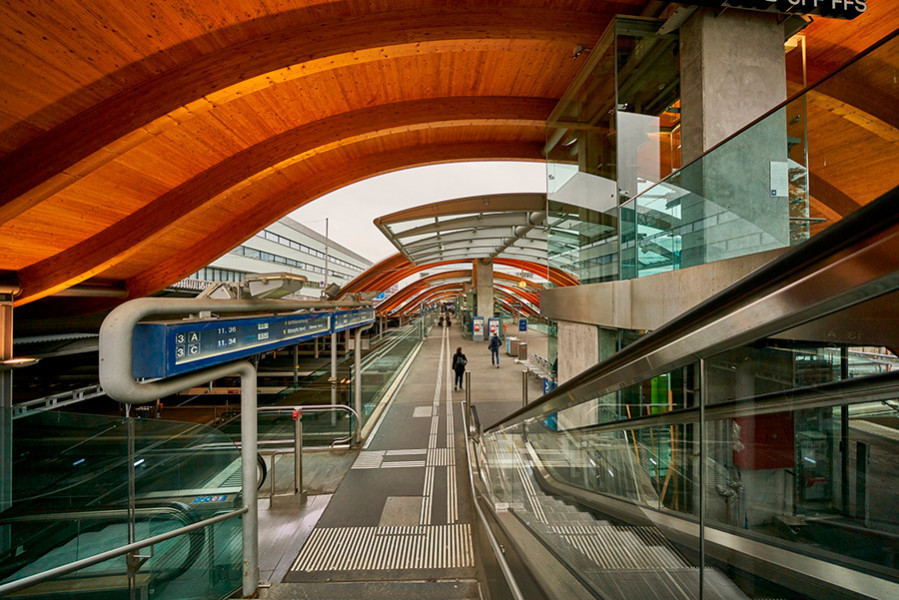
Switzerland
RBS: Performance study of Bern railway station
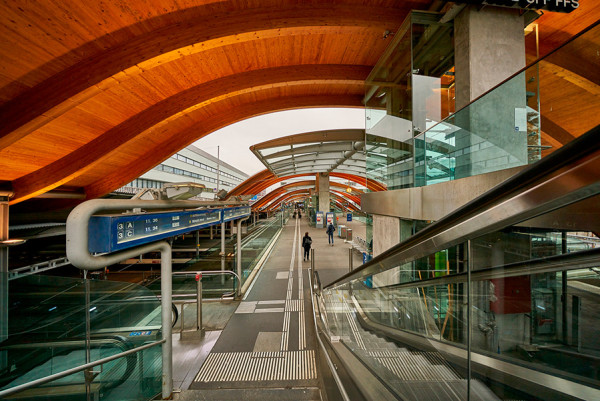
As part of the ‘Zukunft Bahnhof Bern’ expansion programme, a new underground station for Regionalverkehr Bern-Solothurn (RBS) trains is currently under construction and is scheduled to go into operation in 2031 according to the latest plans. Compared to the existing station, this new facility will feature significantly larger public areas and an optimised track layout.
SMA supported RBS as early as 2010 and 2016 in specifying the new facility and developing future service concepts. To verify the expected operational quality, SMA carried out simulations, focusing on achievable train intervals and separation times. With the new station currently under construction, the layout and signalling design have now been finalised, enabling a review and refinement of the previously determined values based on the detailed design.
To further assess the expected performance of the new RBS station compared to the current one, the existing timetable was simulated on the new infrastructure as a basis for comparison. For this purpose, the distribution of service disruption delays across all RBS lines in Worblaufen during a representative month was determined using open-source data and used as input for the simulation. The departure delays in Worblaufen resulting from a simulation using the OpenTrack software were in turn compared with the actual data and validated to ensure the best possible match. Subsequently, the timetable planned for 2035 was simulated using the same arrival delays, and the resulting departure delays were analysed. It was demonstrated that, with the new RBS station and an increased number of trains, a comparable level of service quality to that of the current station can be achieved.
To address various issues, a simulation model of the rail network between Solothurn and Oensingen was previously developed for Aare Seeland mobil AG (asm). This model formed the basis for further investigations. As a first step, the existing speed limits were reviewed and updated where necessary. Two scenarios were defined for this purpose, based on speed limits of 80 km/h and 100 km/h respectivel...
Continue reading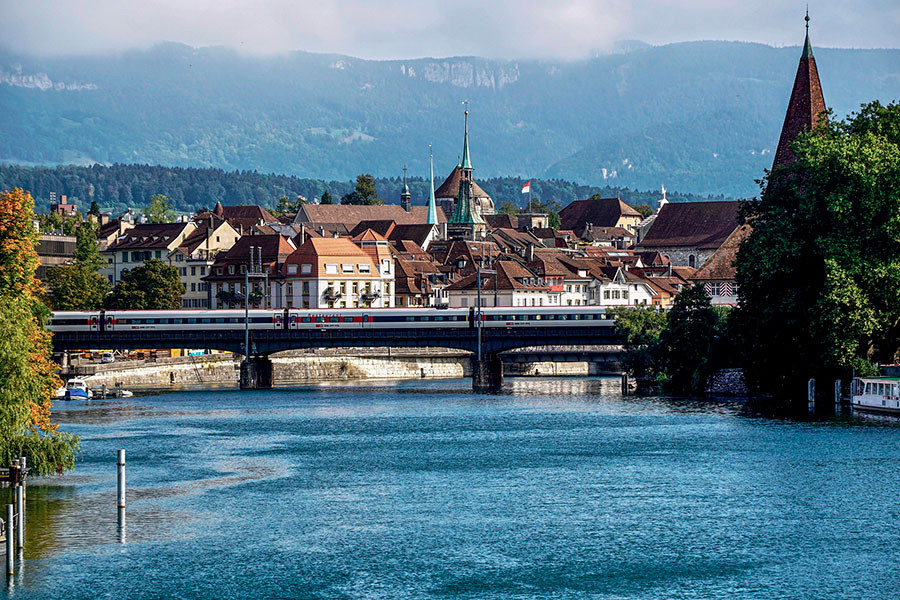
Switzerland
Aare Seeland mobil AG: Review of running time calculations for the Oensingen–Solothurn route based on different vehicle concepts
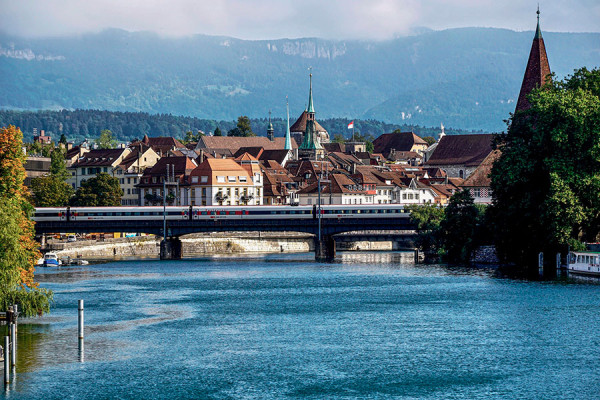
To address various issues, a simulation model of the rail network between Solothurn and Oensingen was previously developed for Aare Seeland mobil AG (asm). This model formed the basis for further investigations.
As a first step, the existing speed limits were reviewed and updated where necessary. Two scenarios were defined for this purpose, based on speed limits of 80 km/h and 100 km/h respectively.
In a second step, a rolling stock benchmark was carried out in collaboration with asm. Various vehicle types available on the market were examined in terms of their operationally relevant parameters and modelled accordingly. On this basis, comparative running time calculations were carried out for the Solothurn–Oensingen route to assess the effects of different rolling stock strategies on running times, timetable design and operational stability.
The results show that the choice of rolling stock has a significant influence on achievable running times due to the high density of stops and the associated frequent acceleration and braking manoeuvres. There are differences in running times of up to 8% between the vehicle concepts examined, which has a direct impact on timetable design, fleet planning, and potentially on vehicle requirements.

In 2025, SMA supported SBB Infrastructure in three studies aimed at assessing the robustness, capacity and consistency of the Swiss French-speaking region’s rail network in the medium and long term. This work was carried out systematically using Viriato, a tool designed to support decision-making by rail industry stakeholders. The first study focused on changes to robustness linked to the assessme...
Continue reading
Switzerland
SBB Infrastructure: Capacity and resilience studies in French-speaking Switzerland
In 2025, SMA supported SBB Infrastructure in three studies aimed at assessing the robustness, capacity and consistency of the Swiss French-speaking region’s rail network in the medium and long term. This work was carried out systematically using Viriato, a tool designed to support decision-making by rail industry stakeholders.
The first study focused on changes to robustness linked to the assessment of a new junction in the Fribourg conurbation. SMA assessed several infrastructure scenarios and carried out a total of 21 robustness tests in Viriato, enabling the impact of the proposed solutions on operational robustness and on available capacity for future developments to be objectively assessed.
The second study concerned the development of the Furet tunnel in Geneva, with the aim of introducing a strengthened link between Annemasse, Lancy–Pont-Rouge and La Plaine or Geneva Airport. SMA supported SBB-I in defining the 2035+ service objectives, developing timetable variants and analysing their capacity, robustness and resilience, whilst incorporating the planned developments of the Geneva rail hub.
Finally, SMA conducted a review looking ahead to 2050+ of several families of infrastructure options for a new line between Perroy and Vengeron and assessed their capacity impacts and resilience, as well as their possible phasing in the medium term. The analyses were based on an iterative approach combining supply, operations and infrastructure via Viriato.
These three projects demonstrate SMA’s ability to provide integrated and objective analyses, supporting coherent, ambitious and robust rail planning.
Luxembourg
In response to the sustained growth in cross-border travel within the Greater Region and in line with the National Mobility Plan 2035, the Luxembourg Ministry of Mobility, the German authorities of Rhineland-Palatinate and Saarland, and the French Grand Est region have commissioned SMA to carry out a strategic study to assess the feasibility of a direct rail link between Luxembourg – Saarbrücken –...
Continue reading
Luxembourg
Ministry of Mobility and Public Works: Feasibility study for the introduction of a direct rail link between Luxembourg, Saarbrücken and Mannheim
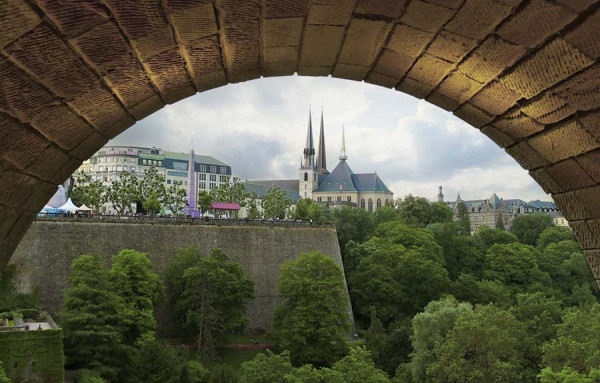
In response to the sustained growth in cross-border travel within the Greater Region and in line with the National Mobility Plan 2035, the Luxembourg Ministry of Mobility, the German authorities of Rhineland-Palatinate and Saarland, and the French Grand Est region have commissioned SMA to carry out a strategic study to assess the feasibility of a direct rail link between Luxembourg – Saarbrücken – Mannheim. Currently, the route relies mainly on an unreliable coach service, whilst rail journeys require at least one change, which significantly limits their appeal.
The approach was based on a detailed assessment of the current situation, an analysis of traffic potential, followed by the design and evaluation of several scenarios. Two routes were studied – via Trier and via Metz – across three time horizons: 2026, 2030 and 2035+. The assessment highlighted uncompetitive journey times and major technical constraints linked to differences in the electrical systems, gauge and signalling between the Luxembourg, French and German networks. The demand analysis revealed three key corridors, dominated by traffic between Luxembourg and France, followed by the Trier–Moselle and Konz–Saarlouis routes.
The multi-criteria assessment identified a composite scenario combining two complementary routes:
– Via Germany: Luxembourg – Saarbrücken – Mannheim at hourly intervals, using dual-system rolling stock and infrastructure adaptations, geared towards regional and inter-regional traffic;
– Via France: Luxembourg – Metz – Saarbrücken – Mannheim with a two-hourly service, requiring tri-system rolling stock, geared towards mainline services.
The study also produced an operational roadmap, incorporating future studies, enhanced consultation with infrastructure managers (IMs) and authorities, as well as the socio-economic and institutional analyses to be carried out.
Finally, two in-depth studies helped to strengthen Franco-German coordination: one focusing on the development stages of the service between Luxembourg and Trier, the other on the robustness of the long-term scenario. All this work was carried out using a single Viriato planning database covering the entire tri-national area, ensuring the consistency of analyses with data from the three IMs, a consistent comparison of scenarios, and the precise identification of the additional infrastructure required.

The Luxembourg Railway Administration (ACF) assumes, among other responsibilities, the functions of capacity allocation and infrastructure pricing in rail transport. Rail infrastructure in Luxembourg is heavily utilised. Furthermore, due to the size of the Grand Duchy, its railway network is closely linked with those of its three neighbours, resulting in many trains operating cross-border on the L...
Continue reading
Luxembourg
ACF: Implementation of the Capacity Model within the TTR Framework
The Luxembourg Railway Administration (ACF) assumes, among other responsibilities, the functions of capacity allocation and infrastructure pricing in rail transport. Rail infrastructure in Luxembourg is heavily utilised. Furthermore, due to the size of the Grand Duchy, its railway network is closely linked with those of its three neighbours, resulting in many trains operating cross-border on the Luxembourg network. According to figures from the Luxembourg regulator ILR, international passenger traffic amounted to about one third of all passenger traffic on the lines of the Grand Duchy in 2024, while international freight traffic accounted for around two thirds of the total freight traffic in the same year.
In this context, ACF commissioned SMA to assist in the development of the production process for the Capacity Model and in planning the Capacity Model for the 2028 annual timetable.
Following an initial diagnostic phase of the existing process, a new process was proposed, detailing the various production steps in the different tools as well as the necessary coordination with internal and external stakeholders. Together with the infrastructure manager of Luxembourg Railways (CFL GI), a Viriato database was established, including modelling of the infrastructure and rolling stock, as well as a planning guide compiling the values used in the planning process.
A systematic timetable was then planned in Viriato. Various scenarios were examined to consider the requirements of individual applicants. This systematic timetable was subsequently extended to a typical day, in accordance with the previously established process. The timetable was planned both for lines and stations, including non-commercial movements. The results required for the TTR process were then produced. Throughout the planning process, coordination took place with CFL GI, neighbouring infrastructure managers, and applicants for capacity.
France

SMA carried out a study for the Grand Paris Sud urban community on improving rail services between Malesherbes, Corbeil-Essonnes and Paris via the Seine Valley. Since 2019, stations in the Seine Valley and on the line linking Corbeil-Essonnes to Malesherbes have been connected to Paris via a change at Juvisy onto the RER C or the RER D, which operates almost entirely as a through service. The stud...
Continue reading
France
Grand Paris Sud: Study into improving rail and road links between Malesherbes, Corbeil and Paris
SMA carried out a study for the Grand Paris Sud urban community on improving rail services between Malesherbes, Corbeil-Essonnes and Paris via the Seine Valley. Since 2019, stations in the Seine Valley and on the line linking Corbeil-Essonnes to Malesherbes have been connected to Paris via a change at Juvisy onto the RER C or the RER D, which operates almost entirely as a through service. The study identified possible developments for a service connecting these stations to Paris via trains with no changes and no stops between Juvisy and Paris, either by extending existing trains to Paris or by adding new services. Over various time horizons, SMA analysed available capacity based on data provided by SNCF Réseau to propose service development solutions utilising residual capacity for the short term, and by proposing systematic timetable adjustments for the long term. The analysis focused on the line capacity, as well as capacity at Paris-Lyon station and the Corbeil hub. It also included an impact assessment on rolling stock rosters and estimated the fleet required to deliver such a service. The results made it possible to identify available train paths in the short term to introduce the first direct services in the 2026 annual timetable, and to outline the steps required to gradually expand the service over the long term to create a line designated ‘S’, distinct from the RER D.
Strasbourg’s current tram network comprises six lines, with services running every 4 to 7 minutes during peak hours. Its gradual expansion has led to increasing congestion in the city centre, just as new extensions are being considered that could exacerbate the problem. Against this backdrop, the Eurométropole de Strasbourg (EMS) commissioned SMA to conduct an in-depth analysis of the network’s cu...
Continue reading
France
Eurométropole de Strasbourg: Support for the development of the tram network
Strasbourg’s current tram network comprises six lines, with services running every 4 to 7 minutes during peak hours. Its gradual expansion has led to increasing congestion in the city centre, just as new extensions are being considered that could exacerbate the problem. Against this backdrop, the Eurométropole de Strasbourg (EMS) commissioned SMA to conduct an in-depth analysis of the network’s current operations and to explore consistent medium- and long-term development scenarios.
The study was structured around several key areas: a comprehensive assessment of the current network (service coverage, rolling stock, operations, infrastructure), a capacity analysis of several critical sectors, an analysis of development opportunities, and the design of comprehensive scenarios combining service coverage, timetables and infrastructure. Each scenario was accompanied by a technical evaluation to assess its feasibility, the resources required and the expected benefits. The methods and tools employed enabled, within the framework of discussions between the EMS and the operator, an objective assessment of the network’s actual level of saturation and a clarification of the scope for potential development. The Viriato planning tool played a central role, not only for capacity analyses but also for assessing robustness through multiple incident simulations. The running time analysis module also helped to shed light on the potential impact of service adjustments or extensions to key lines.


The current night train service in France connects Paris to eight destinations, some of which are served on a regular basis. It is currently operated under a contract between the State and SNCF Voyageurs as part of the scheme for providing regional balance trains. Like all contracted services, this service will be subject to a tender process for its operation once the current contract expires. Fur...
Continue reading
France

French Ministry of Transport: Supporting the development of the night train network
The current night train service in France connects Paris to eight destinations, some of which are served on a regular basis. It is currently operated under a contract between the State and SNCF Voyageurs as part of the scheme for providing regional balance trains. Like all contracted services, this service will be subject to a tender process for its operation once the current contract expires. Furthermore, the rolling stock is reaching the end of its service life and must be replaced, including both locomotives and carriages.
2025 provided an opportunity for SMA to support the Ministry in preparing for these major changes across several areas. SMA contributed to defining the functional characteristics of the new rolling stock and for this, developed an operational model based on passenger data, as well as various plans of modern night train carriages and their different comfort levels, enabling verification that the selected functional parameters were both realistic and capable of providing a capacity suited to the various planned destinations, their seasonal patterns and their customer profiles. This operational model will be further developed in the future to prepare the tender for the operation of night trains.
SMA also assisted the Ministry with several projects relating to the maintenance and storage facilities for these trains, which will need to be modified for the new rolling stock and new services, both in the Paris region and in the provinces. SMA carried out an assessment of all available facilities at terminus stations and supported the Ministry in leading a study on the changes to be made at the Parisian sites of Masséna and Ivry-sur-Seine.
Finally, SMA supported the Ministry in a sourcing process involving potential future operators.
The regional Services and Infrastructure networks, overseen by the State, enable capacity planning and the modification of infrastructure in line with medium- and long-term service objectives. In this context, the 10-year Emerging Operational Plans (PEE) and 5-year Reference Operational Plans (PER) are essential tools. As part of this, SNCF Réseau commissioned SMA to assist with tasks involving de...
Continue reading
France
SNCF Réseau: Support for modelling freight traffic timetables in the PEE and PER
The regional Services and Infrastructure networks, overseen by the State, enable capacity planning and the modification of infrastructure in line with medium- and long-term service objectives. In this context, the 10-year Emerging Operational Plans (PEE) and 5-year Reference Operational Plans (PER) are essential tools.
As part of this, SNCF Réseau commissioned SMA to assist with tasks involving defining the working methodology for domestic freight within the operational plans, determining the capacity developments required to achieve the long-term freight service target, and analysing the capacity model, including train paths and engineering works, for a typical day.
SMA worked on the target service, defined jointly by SNCF Réseau and the DGITM of the Ministry of Transport based on a typical day, to determine the target service pattern to be used as input data for timetable planning in the operational plans. Subsequently, specific train paths were planned using Viriato to determine whether the sequential use of inter-yard timed freight train paths would enable the performance required for long-distance freight traffic. To analyse more systematically the relevance of potential timetable changes regarding capacity planning for works, capacity analyses were carried out on selected freight routes.
Throughout the study, the working methods were documented to contribute to the development of the process for producing operational plans.
The Nouvelle-Aquitaine Region is the authority responsible for organising regional public transport, particularly rail services. In this capacity, it defines the transport service provision and ensures its implementation through an operator selected via a competitive tendering process. It has therefore divided its network into several lots. In this context, the Region commissioned SMA to assist i...
Continue reading
France
Région Nouvelle Aquitaine: Support with preparations for opening up to competition
The Nouvelle-Aquitaine Region is the authority responsible for organising regional public transport, particularly rail services. In this capacity, it defines the transport service provision and ensures its implementation through an operator selected via a competitive tendering process. It has therefore divided its network into several lots.
In this context, the Region commissioned SMA to assist it in defining the service to be specified in the public procurement procedure, by identifying areas for improvement compared to the current situation in order to make better use of the resources available across the region, whilst taking into account the new constraints arising from a contract-based organisation of services.
SMA therefore created a baseline scenario, enabling an estimate of the resources required to operate the current service within an allocated frame-work, and then developed several scenarios for expanding the service by identifying the necessary resources: rolling stock and driver shifts. The various Viriato modules were used for this purpose and enabled the au-tomated calculation of certain indicators, which then allowed the Region to estimate the projected cost of the corresponding services.
The exercise was carried out across all days of a typical week to fully account for the specific needs of weekends (additional rolling stock, extra trains, etc.) as well as the impacts of fluctuations in demand on operational planning (particularly rolling stock maintenance).
During 2025, this work focused on finalising the studies for Lot A (Poitou-Charentes), followed by Lot’s B (Limousin – Périgord) and D (Southern Aquitaine).

The Nouvelle Aquitaine Mobilités (NAM) association brings together all the transport planning authorities (AOMs) in the region. Among its remit, the association supports its members in their fare-setting processes, with a view to simplifying matters for public transport users. It is within this framework that NAM commissioned SMA to carry out a two-part project. The first paart analysed the impact...
Continue reading
France
Nouvelle Aquitaine Mobilités: Support for fare harmonisation and the assessment of fare zone projects
The Nouvelle Aquitaine Mobilités (NAM) association brings together all the transport planning authorities (AOMs) in the region. Among its remit, the association supports its members in their fare-setting processes, with a view to simplifying matters for public transport users. It is within this framework that NAM commissioned SMA to carry out a two-part project.
The first paart analysed the impact of various scenarios for harmonising fares for groups eligible for discounts (children, young people, senior citizens, etc.) on revenue and passenger numbers across its members’ networks. Using network validation and revenue data, as well as various socio-demographic data, SMA modelled the volume of journeys potentially affected by changes to passenger categories and carried out the corresponding financial estimates.
The second part of the project involved supporting NAM in the context of es-tablishing fare zones, with an initial case study in the Gironde region carried out in parallel with studies related to the Bordeaux SERM. After assessing the networks, usage patterns and current fares, SMA developed a detailed model of public transport usage across the Gironde region (urban networks, coaches and regional trains). SMA then proposed several fare structure models based on the principle of access to all available modes and networks within a given territory or for a specific journey. Based on proposed fare bands and price levels established in partnership with all the relevant AOMs, the model devel-oped by SMA enabled the assessment of the impacts of numerous scenarios on the various networks in terms of journeys and revenue, thereby contributing to the debate among NAM members.
Belgium
The framework support contract with SNCB has enabled SMA to carry out several analyses relating to running times for transport planning purposes. SNCB sometimes uses the Viriato running time calculator to estimate train running times without having to submit formal requests to the infrastructure manager, Infrabel. In an initial study, the assumptions (infrastructure, rolling stock, etc.) and metho...
Continue reading
Belgium
SNCB: Assessment of the potential for reducing running times
The framework support contract with SNCB has enabled SMA to carry out several analyses relating to running times for transport planning purposes. SNCB sometimes uses the Viriato running time calculator to estimate train running times without having to submit formal requests to the infrastructure manager, Infrabel.
In an initial study, the assumptions (infrastructure, rolling stock, etc.) and methods for calculating running times were quantified with the aim of calibrating the Viriato calculation model to best replicate the results of Infrabel’s tool. The study showed that there are significant differences in the infrastructure assumptions and that using the tool ‘blindly’ is problematic. However, Viriato can be used to perform relative calculations (by calculating running times for the baseline and the project scenarios), enabling the identification of gains or losses in running time associated with certain changes to the timetable or infrastructure (stopping policy, rolling stock, route used, speed profile, etc.).
A second study then made it possible to objectively assess the potential of three methods for reducing running times and the possible threshold effects for gaining competitiveness, capacity or productivity: eliminating rounding of times, removing performance limitations and reducing stopping times. SMA carried out running time calculations in Viriato using various performance scenarios with and without rounding and conducted an international benchmark of current stopping times. Sensitivity tests demonstrated that different approaches to rounding, as well as assumptions regarding stopping times, can significantly influence the results.

With a view to the official adoption of the European Directive on the allocation of railway infrastructure capacity (2012/34/EU), Infrabel is considering the necessary adjustments to its capacity planning process. SMA supported Infrabel in developing a structured planning process aligned with the Timetable Redesign ("TTR") process, particularly for the Capacity Strategy phase (5 years prior to ent...
Continue reading
Belgium
Infrabel: Implementation of TTR: Capacity Strategy - Planning Process
With a view to the official adoption of the European Directive on the allocation of railway infrastructure capacity (2012/34/EU), Infrabel is considering the necessary adjustments to its capacity planning process. SMA supported Infrabel in developing a structured planning process aligned with the Timetable Redesign ("TTR") process, particularly for the Capacity Strategy phase (5 years prior to entry into service).
For a series of workshops involving various Infrabel departments, SMA conducted an assessment of the current macro-process for capacity planning, identified the obligations set out in the European Directive, and proposed a new process compliant with it. The focus was on Infrabel’s needs, allowing European regulations to be used as an opportunity to improve existing processes in line with the Belgian context and Infrabel’s internal and external requirements.
Various levels of detail were discussed, and choices were made and documented for a national capacity planning process, which will feed into the Capacity Strategy document to be drawn up by Infrabel and position it in relation to the upstream and downstream planning stages, notably the Capacity Model, highlighting elements that can be incorporated throughout the capacity planning process.